
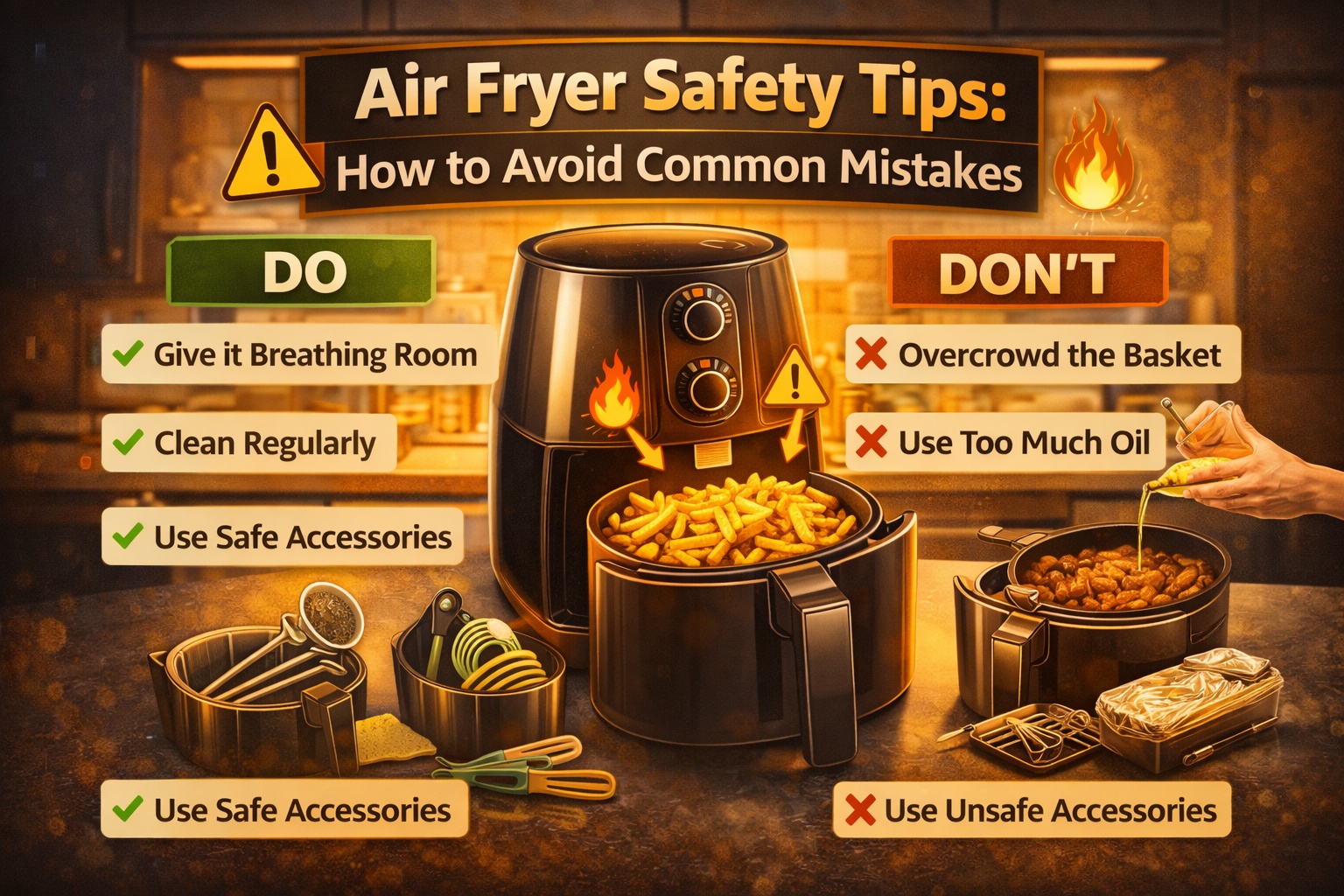
Air fryers have quickly become one of the most popular kitchen appliances in modern homes—and for good reason. They promise crispy results with less oil, faster cooking times, and easy cleanup. But while air fryers are generally safe when used correctly, air fryer safety is something many users underestimate, especially once the “new appliance excitement” wears off.
Most air fryer accidents don’t come from product defects. They happen because of simple mistakes: placing the appliance too close to a wall, overfilling the basket, using unsafe accessories, or ignoring basic cleaning. These errors can lead to smoke, overheating, damaged countertops, or even kitchen fires. The tricky part is that many of these risks aren’t obvious until something goes wrong.
This guide breaks down the most common air fryer safety mistakes and explains exactly how to avoid them. Whether you’re a first-time air fryer owner or someone who uses one daily, you’ll learn how to operate your appliance safely, protect your kitchen, and get consistently great results without unnecessary risks.
Table of Contents
Understanding How Air Fryers Work (and Why Safety Matters)
Air fryers cook food by circulating extremely hot air at high speed around a compact cooking chamber. This design creates crisp textures similar to deep frying—but without submerging food in oil. While this technology is efficient, it also means air fryers operate at high temperatures in a small enclosed space, which makes safety practices essential.
Why Air Fryers Get So Hot
Most air fryers operate between 350°F and 400°F, with heating elements located just inches from food. Grease buildup, airflow blockage, or poor ventilation can cause temperatures to rise beyond safe levels.
Why Mistakes Escalate Quickly
Because air fryers heat fast, small errors can turn into problems quickly:
- Overcrowded baskets restrict airflow
- Excess oil creates smoke and flare-ups
- Blocked vents trap heat
Air fryers are safer than deep fryers—but only if airflow is respected. Nearly every safety issue traces back to blocked or mismanaged air circulation.
Recommended Air Fryers with Strong Safety Features
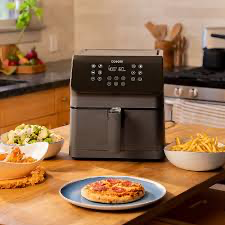
COSORI Pro II Air Fryer
Key Features
- Automatic shut-off protection
- Overheat prevention sensors
- Non-stick, easy-clean basket
Advantages
- Excellent airflow design
- Strong safety controls
- User-friendly presets
Disadvantages
- Takes counter space
- Basket size may be small for large families
Ninja Air Fryer Max XL
Key Features
- Ceramic-coated basket
- Wide temperature range
- Auto-shutoff safety system
Advantages
- Fast, even cooking
- Easy maintenance
- Durable construction
Disadvantages
- Exterior gets warm
- Louder fan than some models
Mistake #1: Placing the Air Fryer in the Wrong Location
Why Placement Is a Major Safety Factor
Air fryers need space to release heat. Placing them against walls, under cabinets, or near flammable materials traps hot air and increases fire risk.
Safe Placement Guidelines
- Leave at least 5 inches of clearance on all sides
- Never place under overhead cabinets
- Use heat-resistant countertops
- Avoid placing near water sources
Real-World Example
Many reported air fryer incidents involve melted cabinet finishes or scorched walls—caused by hot exhaust blowing upward.
If your air fryer has rear or top vents, placement matters more than wattage.
Mistake #2: Overloading the Basket
Why Overfilling Is Dangerous
An overcrowded basket blocks airflow, causing:
- Uneven cooking
- Excess smoke
- Overheating
How to Load Food Safely
- Arrange food in a single layer
- Shake or flip halfway through cooking
- Cook in batches for larger portions
Safety vs Convenience
Trying to cook everything at once may save time, but it dramatically increases the risk of overheating and grease buildup.
Overfilling doesn’t just ruin food—it forces the heating element to work harder, shortening appliance lifespan.
Mistake #3: Using Too Much Oil or Unsafe Ingredients
Why Oil Is a Common Problem
Although air fryers use less oil, excess oil can drip onto heating elements, creating smoke or flare-ups.
Ingredients That Require Caution
- Fatty meats (bacon, sausages)
- Cheese without breading
- Lightweight foods that can fly into the element
Safer Cooking Tips
- Use oil sprays instead of pouring oil
- Secure lightweight food with racks
- Avoid loose parchment paper
Most air fryer “fires” are actually grease smoke incidents—not electrical failures.
Mistake #4: Ignoring Cleaning and Maintenance
Why Dirty Air Fryers Are Risky
Built-up grease and food residue can:
- Ignite at high temperatures
- Produce toxic smoke
- Affect airflow and heating accuracy
Safe Cleaning Habits
- Clean basket and tray after every use
- Wipe interior walls weekly
- Check vents for grease buildup
What Not to Do
- Never submerge the main unit in water
- Avoid abrasive scrubbers
A clean air fryer runs cooler and more efficiently, reducing long-term safety risks.
Mistake #5: Using the Wrong Accessories
Accessory Safety Basics
Not all accessories labeled “air fryer safe” truly are.
Avoid These Risks
- Plastic accessories not rated for high heat
- Oversized pans that block airflow
- Aluminum foil covering vents
Safe Accessory Guidelines
- Use manufacturer-approved accessories
- Choose silicone or metal rated for 400°F+
Accessories should enhance airflow—not restrict it.
Air Fryer Electrical and Power Safety
Common Electrical Mistakes
- Plugging into extension cords
- Sharing outlets with high-wattage appliances
- Using damaged power cords
Best Practices
- Plug directly into wall outlets
- Avoid power strips
- Inspect cords regularly
Air fryers draw significant power—treat them like ovens, not small gadgets.
Quick Takeaways
- Air fryer safety depends on proper airflow and placement
- Overloading the basket increases fire and smoke risk
- Excess oil is a common cause of air fryer problems
- Regular cleaning is essential for safe operation
- Accessories must be heat-rated and airflow-friendly
- Electrical safety matters as much as cooking technique
Air fryers are one of the safest and most convenient kitchen appliances when used correctly. Most safety problems come from small, preventable mistakes rather than design flaws. By giving your air fryer enough space, loading food properly, cleaning it regularly, and using safe accessories, you dramatically reduce risks while improving cooking results. Treat your air fryer like a compact convection oven—not a countertop toy—and it will reward you with fast, delicious, and safe meals for years to come.
FAQs
- Can air fryers catch fire?
Rarely, but improper use like blocked vents or grease buildup can increase risk. - Is it safe to leave an air fryer unattended?
Short periods are usually fine, but it’s best to stay nearby while cooking. - Can I use parchment paper in an air fryer?
Yes, but only perforated paper designed for air fryers and properly secured. - Do air fryers need special outlets?
No, but they should be plugged directly into wall outlets. - How often should I clean my air fryer?
After every use for the basket and tray; weekly for the interior.
Have you ever experienced smoke or unexpected issues with your air fryer? Share your experience in the comments and help other readers cook more safely. If this guide helped you, feel free to share it with friends who use air fryers regularly.

Hi, I’m Maria from Los Angles. Born and raised in a family of avid home cooks, developed a love for food at a young age. I remember spending weekends in the kitchen with her parents, learning how to make family favorites like lasagna and chocolate chip cookies. After graduating from college, started working as a marketing manager for a tech company, but I found myself spending all of her free time in the kitchen. Then I decided to share my experiences on FindForKitchen blog.