

Cookware deals are everywhere. Flash sales, limited-time offers, influencer discounts, and sponsored ads promise premium pots and pans at prices that seem almost too good to ignore. For many home cooks, these deals feel like an opportunity to upgrade the kitchen without overspending. Unfortunately, fake cookware deals have become increasingly common, especially online, and they often lead to disappointment, wasted money, or even unsafe cooking experiences.
This guide explains how to spot fake cookware deals before you click the buy button. Instead of focusing on fear-based warnings, the goal is to help you recognize realistic pricing, understand common marketing tricks, and evaluate cookware claims with confidence. If you are already researching cookware upgrades, this guide pairs well with Best Stainless Steel Cookware Sets on Amazon, 5 Energy-Saving Kitchen Devices, and Best Compact Air Fryers for Small Kitchens, all of which focus on smart, value-driven kitchen buying.
Table of Contents
Why Fake Cookware Deals Are So Common Today
The Rise of Social Media and Flash Sales
Fake cookware deals have become more common largely because of how people shop today. Social media platforms are filled with ads showcasing shiny cookware sets, dramatic before-and-after cooking demonstrations, and countdown timers suggesting that the deal will disappear in minutes. These ads are designed to trigger urgency rather than informed decision-making.
Many of these promotions rely on emotional responses instead of product transparency. Limited stock warnings, exclusive influencer codes, and exaggerated discounts push buyers to act quickly. Once the purchase is made, the cookware that arrives often looks nothing like what was advertised, with thinner materials, poor heat distribution, or missing features.
Low Barrier to Entry for Online Sellers
Online marketplaces allow almost anyone to list products, including sellers with no history in cookware manufacturing. While this accessibility benefits small businesses, it also creates opportunities for low-quality sellers to mimic premium brands.
Some sellers use stock images, copied descriptions, and vague brand names that resemble trusted cookware companies. Without careful evaluation, it becomes easy to mistake a poorly made set for a high-end product offered at a discount.
Unrealistic Discounts That Should Raise Red Flags
Understanding Realistic Cookware Pricing
High-quality cookware has real production costs. Materials such as stainless steel, aluminum cores, ceramic coatings, and reinforced handles require skilled manufacturing. When a full cookware set claims to be discounted by 70 or 80 percent with no clear explanation, that is often a warning sign.
Legitimate sales do happen, especially during seasonal promotions, but they usually involve moderate discounts rather than extreme price drops. Understanding typical price ranges helps you recognize when a deal simply does not make sense.
Fake MSRP and Inflated Original Prices
One common trick is inflating the original price to make the discount appear larger. A cookware set might claim an original price of $799, reduced to $199, even though it never sold for the higher amount.
Checking price history, reading long-term reviews, and comparing similar products can quickly reveal whether the discount is genuine or artificially created.
Misleading Product Descriptions and Buzzwords
Vague Claims Without Technical Details
Fake cookware deals often rely on vague marketing language instead of clear specifications. Phrases like professional grade, chef approved, or premium quality sound impressive but mean very little without supporting details.
Reliable cookware listings clearly explain materials, construction layers, thickness, and compatibility with different stovetops. When these details are missing or intentionally vague, the product may not meet basic performance standards.
Overuse of Trending Terms
Buzzwords such as non-toxic, eco-friendly, or stone infused are frequently used without explanation. While these terms are appealing, they are meaningless without certification or transparent material descriptions.
Legitimate brands explain what makes their cookware safer or more sustainable, rather than relying on trend-driven language alone.
Fake Reviews and Rating Manipulation
Patterns That Signal Inauthentic Reviews
Reviews are one of the most powerful tools for spotting fake cookware deals, but they must be read carefully. Fake reviews often follow patterns, such as overly enthusiastic language, repeated phrases, or vague praise that lacks specific cooking experiences.
Another red flag is a sudden surge of five-star reviews within a short time frame, especially for a brand-new product. Authentic feedback usually appears gradually and includes both pros and cons.
Why Balanced Reviews Matter More Than Perfect Ratings
No cookware set is perfect. Genuine reviews often mention small drawbacks, such as heavier weight, learning curves, or cleaning considerations. A product with hundreds of flawless reviews and no criticism at all should be examined closely.
Reading mid-range reviews often provides the most realistic insight into actual performance.
Images and Videos That Do Not Match Reality
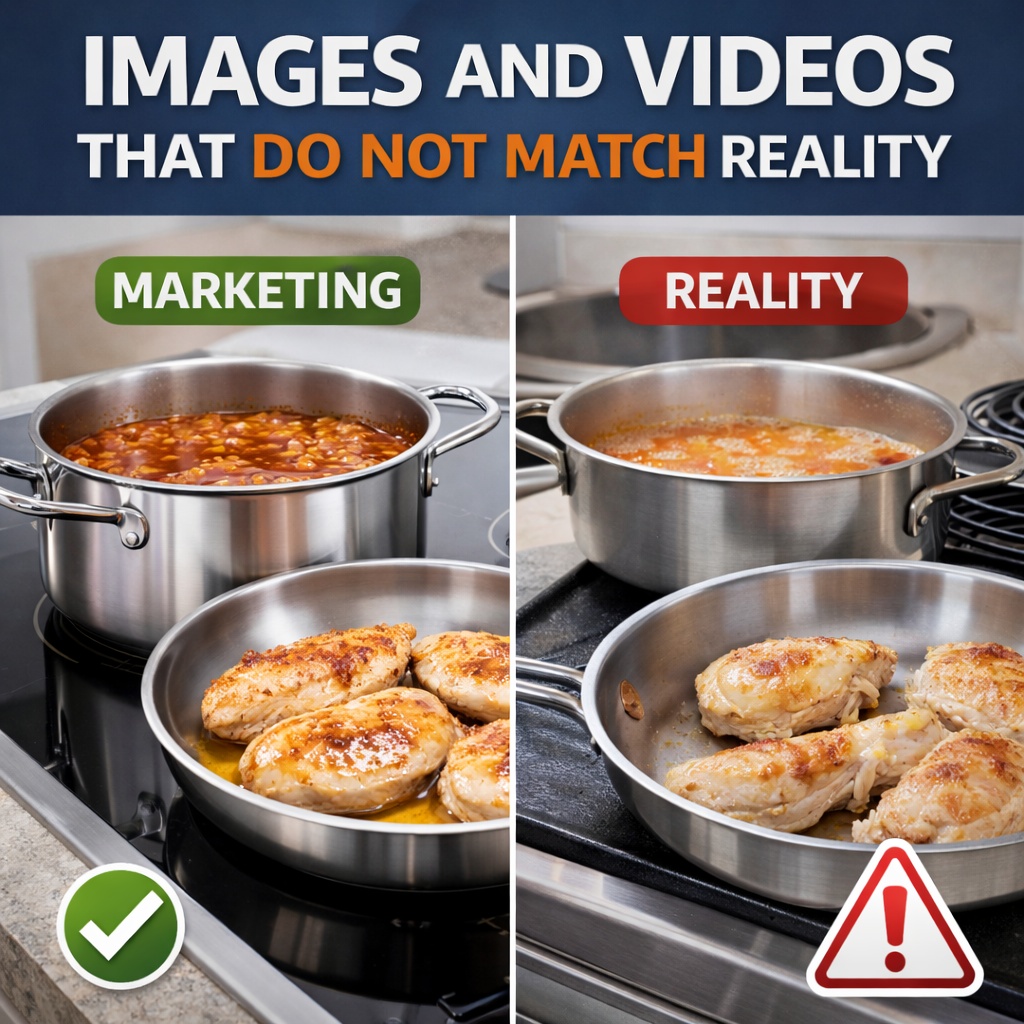
Stock Photos vs Real Product Images
Fake cookware deals frequently rely on heavily edited stock photos that make products appear thicker, shinier, or more refined than they truly are. Lighting, angles, and digital enhancements can dramatically alter perception.
Legitimate sellers usually include multiple images showing cookware in real kitchen environments, close-ups of handles, and interior surfaces after use.
Misleading Demonstration Videos
Some videos demonstrate cooking performance using different cookware than what is actually sold. For example, a video might show thick, multi-ply pans while the shipped product is thin and lightweight.
Cross-checking user-uploaded images and videos helps verify whether the product matches the marketing content.
Brand Names Designed to Confuse Buyers
Look-Alike Brand Strategies
Another tactic involves brand names that closely resemble established cookware brands. Slight spelling changes, similar logos, or generic-sounding names can create false associations.
Before purchasing, searching the brand name outside the marketplace can reveal whether it has a legitimate history or independent presence.
Missing Brand Transparency
Reputable cookware brands typically have official websites, customer support information, and warranty details. Fake brands often lack these basics or provide only minimal contact information.
Transparency is a strong indicator of legitimacy.
Return Policies and Warranty Red Flags
Unclear or Restrictive Return Policies
Fake cookware deals often hide restrictive return policies behind small text. High restocking fees, short return windows, or complicated approval processes are warning signs.
Legitimate sellers usually offer clear, straightforward returns, especially for cookware that customers need time to evaluate.
Warranty Claims That Sound Too Good
Lifetime warranties are appealing, but they should be backed by clear terms. Fake deals may advertise lifetime coverage without explaining what is included or how claims are processed.
A warranty is only valuable if the brand stands behind it.
Price Comparison and Cross-Checking Strategies
Comparing Across Multiple Retailers
One of the most effective ways to spot fake cookware deals is simple comparison. If a product appears dramatically cheaper on one site than everywhere else, caution is warranted.
Trusted retailers tend to have relatively consistent pricing for the same product.
Using Buying Guides as Reality Checks
Independent buying guides help establish realistic expectations for quality and pricing. Articles such as Best Stainless Steel Cookware Sets on Amazon provide useful benchmarks for evaluating deals.
When a deal seems far outside these benchmarks, it deserves closer scrutiny.
Psychological Triggers Used in Fake Cookware Deals
Urgency and Scarcity Tactics
Countdown timers, low stock alerts, and phrases like selling out fast are designed to reduce critical thinking. While genuine sales exist, constant urgency is often manufactured.
Taking time to research rarely causes you to miss a truly worthwhile deal.
Authority and Social Proof Manipulation
Fake deals often claim endorsements from chefs, TV shows, or awards without evidence. Logos may be displayed without authorization.
Verifying endorsements protects you from false credibility signals.

Fake cookware deals thrive on speed, confusion, and emotional buying. By slowing down, checking details, and comparing information, you can avoid low-quality products and misleading promotions.
Smart cookware buying is not about chasing the biggest discount, but about finding real value that delivers safe, reliable performance over time.

Hi, I’m Maria from Los Angles. Born and raised in a family of avid home cooks, developed a love for food at a young age. I remember spending weekends in the kitchen with her parents, learning how to make family favorites like lasagna and chocolate chip cookies. After graduating from college, started working as a marketing manager for a tech company, but I found myself spending all of her free time in the kitchen. Then I decided to share my experiences on FindForKitchen blog.